Denim Care 101: How to Wash Jeans So They Last (2026)
The short answer
Wash jeans far less often than you think, always cold and inside out, and never finish them in a hot dryer.
| Denim type | How often to wash |
|---|---|
| Raw / selvedge | After 4–6 months of wear (then every couple of months), per raw-denim maker Tellason |
| Stretch (elastane/spandex blends) | Every 5–7 wears — stretch holds odor more than rigid cotton |
| Washed / pre-shrunk denim | About every 10 wears, or when dirty or smelly (AG Jeans’ guidance) |
Everything below is the method behind those numbers.
How we put this together (honestly)
We didn’t lab-test jeans in a laundry room — nobody writing denim content did. This guide synthesizes the published care guidance of raw-denim maker Tellason, AG Jeans’ official denim care guide, Levi’s own Shrink-to-Fit sizing chart (as published by its authorized dealers), and the raw-denim primers that the r/rawdenim community points beginners to. Where a claim comes from a brand, we say so. General guidance never overrides your care label — when they conflict, the label wins.
How often should you wash jeans?
The rule the denim world actually lives by: if they look fine, smell fine, and feel fine, they’re fine. Jeans aren’t t-shirts — there’s usually underwear and layers between the denim and your skin, so they don’t need the same frequency.
- Raw or selvedge denim: Tellason’s guidance is to wash after four to six months of regular wear, then every couple of months after that. Less washing preserves the indigo and the high-contrast fades raw denim is bought for — but Tellason is explicit that washing periodically later in a jean’s life extends its life, because accumulated dirt, sweat, and bacteria weaken cotton fibers and hasten holes and blowouts.
- Stretch denim: every 5–7 wears is the common guidance. Elastane and spandex trap odor faster than rigid cotton, and heat degrades the stretch fibers — which is why the drying section below matters double for these.
- Washed, pre-shrunk denim: about every 10 wears, or whenever they’re visibly dirty or smell (AG Jeans).
Rotate two or three pairs and you’ll stretch the time between washes naturally.
The wash method that actually works
- Turn them inside out. This is the single biggest color-preservation move — the face of the denim barely touches anything in the wash.
- Cold water, gentle cycle. Hot water fades dye and shrinks cotton. Use the delicate or hand-wash setting.
- Mild detergent, less than you think. No bleach, ever. Skip fabric softener — it coats the fibers and weakens them over time.
- Close zippers, fasten buttons. Open hardware chews the denim in the spin.
- Wash dark or raw pairs alone the first few times. Indigo bleeds, especially early — it’ll tint everything else in the load.
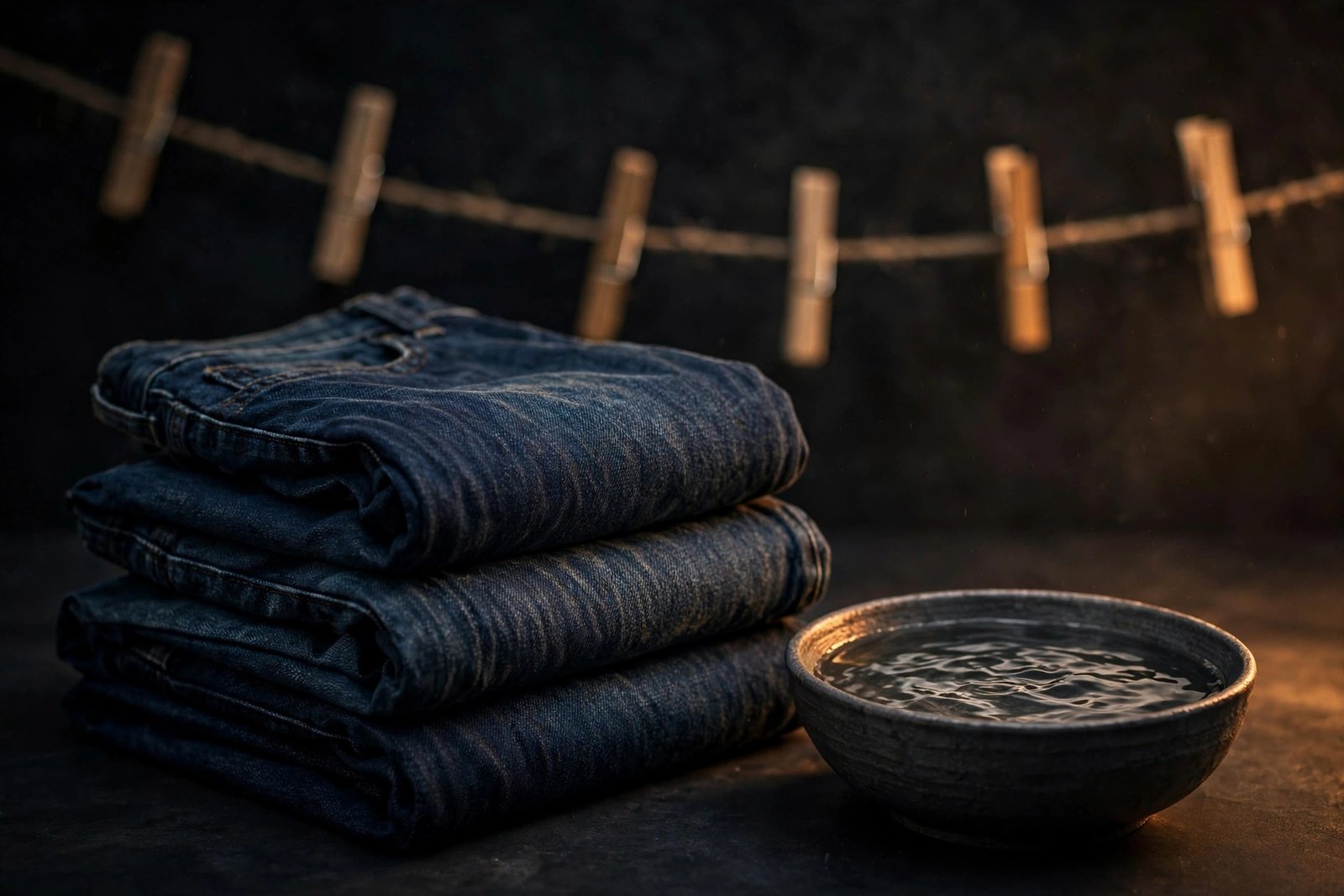
- For raw denim, hand wash or front-loader. Tellason notes that top-loading machines spin jeans too aggressively, which can leave streaks where the denim rubs against itself. A bathtub soak with a teaspoon of detergent, 45 minutes, a light scrub, and a cold rinse does the job.
Drying: the part most men get wrong
Skip the dryer. High heat is the number-one killer of jeans: it shrinks and stresses the yarn, bakes creases into awkward places, makes the fabric brittle, and — the one tall men feel first — it steals length. An inseam you paid a premium for can come out an inch shorter.
- Hang jeans by the waistband or drape them over a rack, and reshape them a little while they’re damp.
- Air-dry away from direct sunlight — UV fades indigo just like hot water does (AG Jeans).
- If you’re crunched for time and must use the dryer: don’t overload it, and stop the cycle halfway and air-dry to finish (AG Jeans’ own advice).
A note on the freezer “trick”
You’ve heard it: put smelly jeans in the freezer overnight instead of washing. Tellason — a company that makes raw denim for a living — calls this an urban legend outright. The freezer doesn’t remove the dirt or whatever is causing the odor. Wash them.
Raw & selvedge basics (the 2-minute version)
- Sanforized vs. unsanforized: most denim is sanforized — pre-shrunk at the mill, so what you buy is close to what you keep. Unsanforized (shrink-to-fit) denim, like Levi’s 501 STF, hasn’t been pre-shrunk: it shrinks when you wash it, typically around 7–10% after the first wash.
- Soak unsanforized jeans before you wear them so they shrink to your size first (the standard raw-denim guidance). Levi’s own Shrink-to-Fit sizing chart accounts for this: for typical sizes it says to buy about 1 inch up in the waist and 3 inches up in the inseam versus your normal size, then wash and let them shrink down to you.
- Buy them snug. Rigid raw denim stretches with wear and molds to your body — that’s the whole point. If they’re comfortable in the store, they’ll be loose in a month.
Keeping your length
For tall men, care is fit preservation. Every hot wash and dryer cycle is a small tax on your inseam:
- Cold wash + hang dry is how a 36″ inseam stays a 36″ inseam.
- If your jeans come with an unfinished hem (common on 38″–40″ inseams), get them hemmed to your exact length by a tailor — don’t try to shrink them to length. Shrinkage is uneven and you can’t un-shrink.
- When a pair starts stacking too much at the ankle after washes, that’s the signal to hem, not to suffer.
Between washes: storage and spot care
- Spot-clean stains instead of running a full wash for a minor accident — a damp cloth and a drop of mild detergent handles most of it.
- Air them out between wears rather than balling them in a hamper.
- Fold neatly or hang by the waistband. Keep them out of direct sunlight in storage — light fades indigo even when you’re not wearing them.
- Rotate. Two or three pairs in rotation means each pair rests, airs, and needs washing far less often.
Washing his jeans? (a note for the women reading this)
If you do the laundry in your house: wash his dark jeans inside out, cold, and separately from your lights — indigo bleed is real and it doesn’t come out. And never finish his favorite pair in a hot dryer “to speed things up”: that’s how a perfect 34″ inseam becomes a 32″ flood. Hang-dry them and he’ll think you hired a denim specialist.
FAQ
Can I machine wash raw denim? Yes — inside out, cold water, delicate cycle, mild detergent, then air dry. Tellason recommends a front-loader over a top-loader (gentler spin) or a simple bathtub hand wash.
Will cold water actually get jeans clean? For everyday wear, yes. Cold water with mild detergent removes sweat and odor; what cold water doesn’t do is strip indigo the way hot water does. For genuinely grimy work jeans, a warm wash is fine — just know it costs some color.
How do I stop my jeans from fading? Wash less, always inside out, cold water, mild detergent, and air-dry out of direct sunlight. Fading is mostly a function of wash frequency and heat — control those two and dark denim stays dark.
Does the freezer trick work? No. It doesn’t remove dirt or the bacteria causing odor. It’s a myth the raw-denim makers themselves debunk.
Is it ever okay to use the dryer? In a pinch: low heat, don’t overload, pull them out halfway and air-dry to finish. Never high heat on a pair whose fit you care about — especially the length.
Do stretch jeans need different care? Same rules, higher stakes: heat degrades elastane faster than it degrades cotton, so air-drying matters even more. And wash them a little more often — stretch blends hold odor.
Jeans that fit right are worth keeping that way. If you haven’t found your fit yet, take the Find Your Fit quiz → — then wash them like you mean it.
Last verified: September 25, 2026. Care guidance synthesized from Tellason’s raw-denim washing guide, AG Jeans’ denim care guide, Levi’s Shrink-to-Fit sizing chart, and established raw-denim primers. Manufacturer care labels always take precedence.